
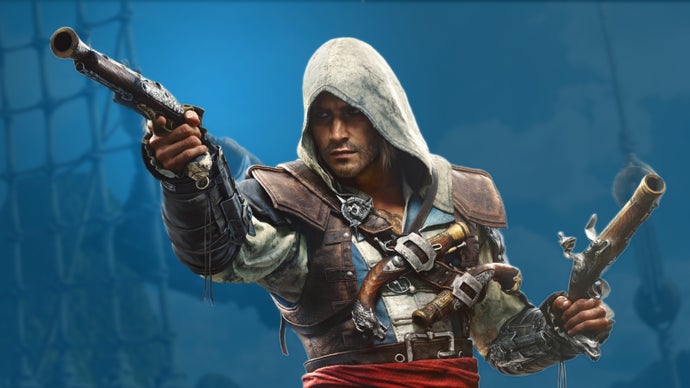
Are you familiar with the Ship of Theseus? It is an ancient philosophical thought experiment about whether an object is the same thing once all of its constituent parts have been replaced. It is a paradox, a fun poke at themes of identity and continuity, and greater minds than mine have attempted to answer the riddle through philosophical, mathematical, and metaphysical lenses. But today, I am going to apply the question to Assassin's Creed: Black Flag Resynced. Ubisoft itself says Resynced has been "rebuilt from the ground up on the latest version of the Anvil Engine". Ergo, the original planks and woodwork that made up the PS3/Xbox 360 game have been stripped back and replaced with something completely different. That game was made in a very different iteration of the Anvil Engine called AnvilNext - we've seen two major updates to Ubisoft's proprietary tech since then. The result is weird. There are imprints of that original game inside Resynced still, but they're obfuscated and marred by all these roughly-inserted new bits and bobs that feel awkward at best, and actively detract from the experience at worst. This oscillation of quality bleeds through into almost every single aspect of the game: the graphics, the sound design, the performance, the writing, the pacing. Sometimes, it's excellent, and you can feel the ambition of Ubisoft Singapore: there's clear love for the source material, and there's a genuine yearning to recreate that magic for a 2026 audience. But then, there's the reality of what we have here: the skeleton of an aging game crammed into the harried skin of something newer, tidier, and smarter. The bones of Black Flag are 13 years old; a reminder of a Ubisoft that reveled in the delights of being the kings of the open world. Quest icons litter your Caribbean map as the developers gleefully sling story missions to and fro, absolutely thrilled that you'll need to spend 15 minutes sailing from The Bahamas' Nassau to, say, Mexico's Tulum. I fear attention spans have slipped in the interceding decade-plus (I certainly struggled with some of the longer sailing sections), and I noticed I used fast travel a lot more in this version of the game than I ever did in my PS4 playthroughs. Similarly, a lot of the main game's questing revolves around the ol'-faithful 'go here, do this' approach that was so prevalent in the 2010 era. This isn't a bad thing, necessarily, but next to the new missions injected into the experience, you can see how the older ones have aged. Then there's the combat overhaul. When it works, it works: protagonist Edward Kenway is a scrappy, dishonorable fighter - a pirate down to his salt-stained boots. You really feel that in Resynced: a rope dart can pull British redcoats off balance, you can take potshots at rogue vagabonds with your dual pistols, and a 'Spartan Kick' seemingly aped from Assassin's Creed Odyssey is a gorgeous tool for knocking any straggling goons into the drink once you've boarded an enemy ship. Firing on all cylinders, it's a delight. But in order to be good at fighting as Edward, you need to know how to parry, how to lock-on to enemies and how to pop off clouds of shot in their direction. And when the lock-on mechanic is as buttery and awkward as it is here, you find yourself at the disagreeable end of a rapier or scimitar far more often than you'd like. I had to restart many fights, not because I lost to the gaggle of Spaniards that were threatening to overwhelm my ship, but bec
AI-Powered News Curation