
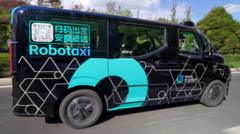
In Beijing's Yizhuang district, driverless robotaxis have become a common sight, with companies like Baidu, WeRide, and Pony.ai operating commercial services within designated areas. Booking a ride is simple via an app, and the vehicles navigate dense traffic, including buses, cyclists, and pedestrians, with little hesitation. The question now is whether Chinese companies can turn robotaxis into another globally dominant sector, similar to their success with electric vehicles (EVs). China's autonomous driving companies benefit from the same industrial ecosystem that made the country the world's largest EV market. Established carmakers like BYD and Geely build the cars, while specialist firms develop the software, leveraging existing supply chains for batteries, sensors, and chips. Kyle Chan from the Brookings Institution notes that the pace of innovation in China's EV industry is unmatched and spills over into related industries. Government policy also supports the sector through pilot programmes allowing testing on public roads. Complex driving conditions in China, with a mix of buses, scooters, and pedestrians, generate vast amounts of data to improve autonomous software. However, expanding overseas presents challenges, as extreme temperatures, heavy rain, snow, and fog can interfere with sensors and battery performance. Maeve Zhang from WeRide highlights that conditions in the Middle East, Southeast Asia, and Switzerland pose different obstacles. Robotaxis are just one part of China's broader autonomous driving ambitions, which include applying the technology to passenger cars, buses, and delivery vehicles.
AI-Powered News Curation