
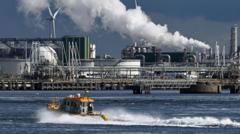
The article examines the immense pressure on the Port of Rotterdam, Europe's largest freight port, to transition away from fossil fuels. The port, which handles almost as much cargo as all UK ports combined, is home to five oil refineries and a cluster of chemical plants. Research links the fossil fuels flowing through the port to around 600 megatonnes of CO2 annually, and the port's own industrial cluster emits about 29 million tonnes of CO2 per year, roughly half of the Netherlands' domestic emissions. A lawsuit by the environmental group Advocates for the Future argues the Port Authority is not doing enough to phase out fossil-based energy and demands a concrete plan to wind down coal, oil, and gas flows. The Port Authority has a plan to cut its own emissions by 90% between 2019 and 2030, which includes developing a hydrogen hub, investing in onshore power for ships, and supporting alternative fuels. It is also focusing on carbon capture and storage (CCS) through the Porthos project. However, critics like Advocates for the Future director Maikel van Wissen argue the port has a responsibility to use its influence to speed up the shift to cleaner operations rather than just managing the flow of fossil fuels. The port maintains it is making efforts to shift its business model.
AI-Powered News Curation