
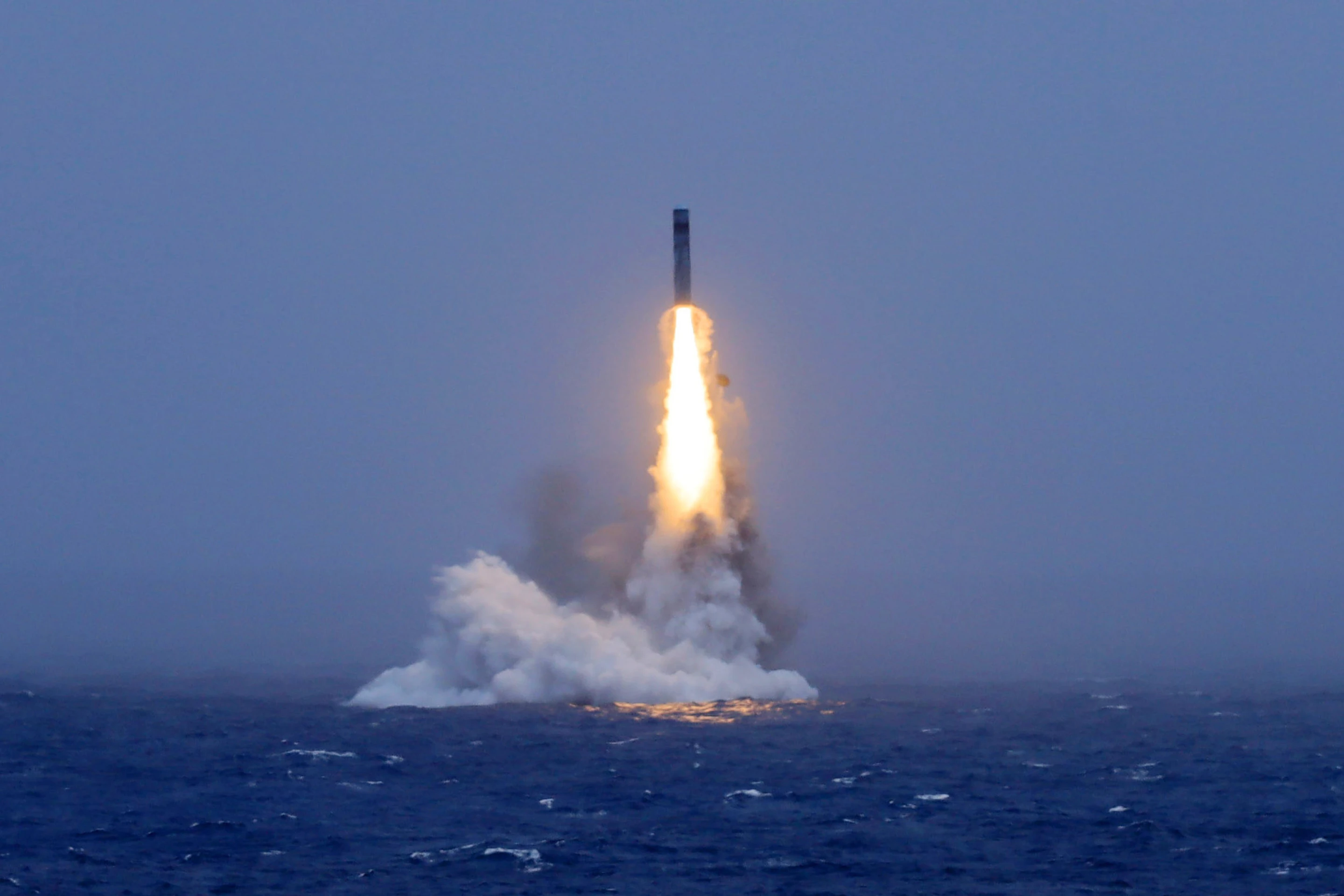
China's test of a submarine-launched ballistic missile this week has drawn criticism from South Pacific nations, who say it undermines the spirit of the South Pacific Nuclear Weapons Free Zone, established by the Treaty of Rarotonga in 1986. The missile, launched from a submarine off China's coast, flew approximately 7,000 kilometers southeast over the Pacific before splashing down near the island nations of Nauru and Tuvalu, both parties to the treaty. While the test does not technically violate the treaty as the missile carried a dummy warhead, New Zealand and Australia accused China of violating the treaty's intent. China has called the test routine and urged against "over-interpretation." Analysts say the test is part of a growing trend of nuclear powers exerting pressure on nuclear weapons-free zones for geostrategic interests, citing examples like the US, UK, and Russia. Tensions over the treaty have been high since 2021, with China previously criticizing the AUKUS nuclear submarine deal between Australia, the US, and the UK as a violation. Olamide Samuel of the Open Nuclear Network warned that such actions could lead to a "slow spiral" and a "race to the bare minimum" of what the treaty demands, rather than furthering peace-oriented goals. Similar nuclear weapons-free zones exist in Africa, Southeast Asia, Latin America, and Central Asia.
AI-Powered News Curation